


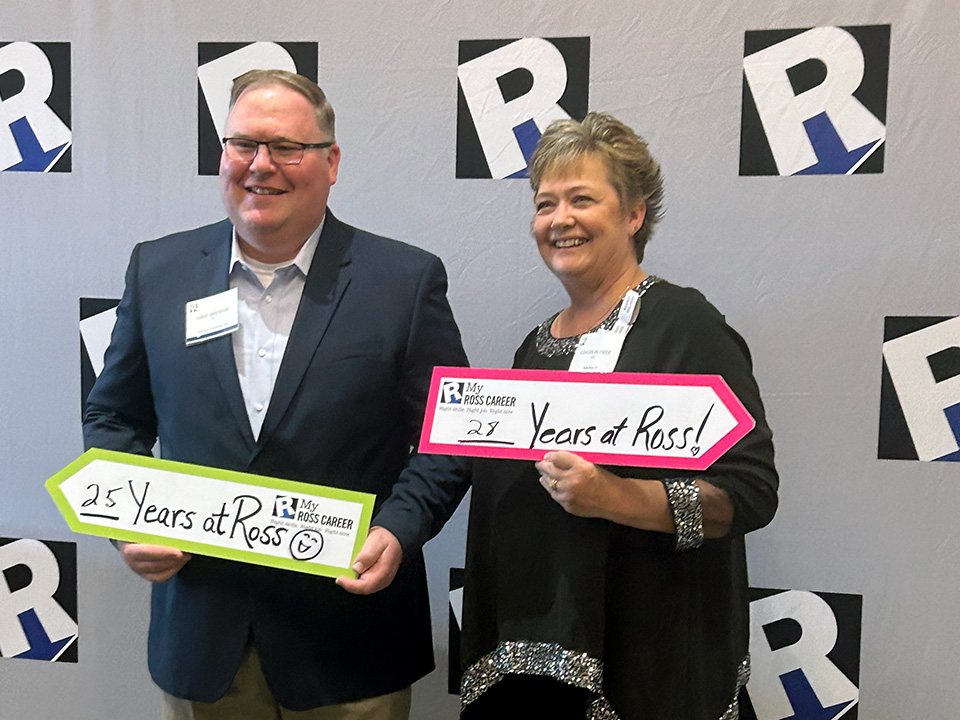
Over her 30 years at Ross, Ginger Rezmer has built a remarkable legacy through her dedication, leadership, and countless contributions. Her impact reaches students, colleagues, and the community through memorable stories, shared lessons, and moments of both joy and challenge. She has been a constant presence recognized by students for her laugh, relied upon by colleagues in the toughest moments, and someone who shows that education is about far more than curriculum.
Her journey has not been simple; it includes growth, grief, learning, humor, and a commitment to supporting others. As Ginger prepares for retirement, this conversation reflects not only on her accomplishments, but on the meaningful difference she has made in the lives of those around her.
Let’s start at the beginning. How did you first find your way to Ross, and what was going on in your life at that time?
My path to Ross wasn’t straightforward, and I think that’s part of why it meant so much to me. I grew up in Saginaw and originally went to college in Wisconsin for elementary education. At that point, I thought teaching young kids was what I was meant to do. But life has a way of taking you in different directions.
After that, I moved to Florida and worked in banking and real estate. I lived there for several years, built a life there, and even picked up some interesting hobbies, like surfing. Eventually, though, I moved back to Michigan, and I found myself at a crossroads. I knew I wanted to do something that mattered, something that felt more aligned with who I was becoming, but I didn’t quite know what that looked like yet.
Ross entered my life at exactly the right moment. I enrolled as a student, completed my program, and did my externship at MidMichigan Regional. That experience changed everything. I saw how education, especially healthcare education, could truly transform someone’s future. When the opportunity came to stay on at Ross, it didn’t feel like just a job offer. It felt like a calling.
What do you remember about those early years as an instructor?
Those early years were eye-opening. I was still learning how to teach, how to manage a classroom, and how to balance being knowledgeable with being approachable. But what stood out to me almost immediately was that my students were coming in carrying so much more than backpacks and notebooks.
Many of them were scared. Some had never felt successful in school before. Others were juggling families, work, financial stress, and personal struggles that most people never see. I realized very quickly that if I focused only on lesson plans and skills, I would miss the bigger picture.
I had to learn how to listen, not just to what students were saying, but to what they weren’t saying. Their body language, their tone, their energy. That awareness became one of the most important tools I carried with me throughout my career.
Over time, your role expanded far beyond the classroom. How did that evolution happen?
It happened gradually and very organically. I spent about 15 years teaching and another 15 years in administrative and leadership roles. I became an administrative instructor, joined the training team, and helped onboard and mentor new instructors. I also had the opportunity to support other campuses, including time spent in Atlanta.
Each transition pushed me to grow. Teaching taught me patience and empathy. Leadership taught me accountability, observation, and how to support people through stress. I learned that leadership isn’t about having all the answers, it’s about being present, being observant, and being willing to step in when someone needs support.
You’ve said that every day brought new challenges. Can you explain what that looked like on a daily basis?
Every single day was different because every student is different. Some days the challenge was academic, helping someone understand a skill or concept that just wasn’t clicking. Other days, the challenge was emotional. I had students who were overwhelmed, discouraged, or on the verge of quitting.
I always felt like I was right there with them, walking through it together. I wasn’t above them or removed from their experience. I was in it with them. And that’s why reaching out for support was so important. Everyone at Ross understands what it’s like to be in the trenches, dealing with real people and real lives.
How important was leaning on your colleagues during those challenging moments?
It was absolutely essential. This work is not meant to be done alone. Being able to reach out to someone who understands exactly what you’re going through makes all the difference.
I always encouraged people, students and colleagues alike, to ask for help and lean on others. That’s how I made it through the hardest moments of my career. No one should feel like they have to carry everything by themselves.
You were known for being very present during huddles. Why were those moments meaningful to you?
Huddles were about connection. I loved being one of the first ones on, encouraging everyone to join, and setting a positive tone for the day. Those moments reminded us that we were a team.
Energy matters. When people feel supported and seen, they show up better, not just for themselves, but for their students. Positivity doesn’t eliminate stress, but it makes it easier to manage together.
Looking back, what accomplishments stand out to you the most?
I’m proud of stepping into leadership roles that weren’t easy. Balancing the needs of students, staff, and administration takes a lot of emotional energy and self-awareness.
But what I’m most proud of is being part of students’ lives. I could have gone into nursing or other fields, but I chose to stay at Ross because helping students succeed gave me a sense of fulfillment I couldn’t find anywhere else. Being part of their journey, that’s everything to me.
What did it feel like seeing your graduates out in the world?
It’s honestly one of the most rewarding parts of this job. I see my graduates everywhere – at work sites, restaurants, even on vacation. They feel like my kids.
Seeing them confident, successful, and thriving reminds me why all the long days and hard moments were worth it.
Your life outside of work included serious health challenges. How did those experiences change you?
Cancer changes you in ways you can’t fully explain unless you’ve lived it. My mom passed away from cancer. My son had Hodgkin’s lymphoma and is now cancer-free. Then I went through cancer myself.
Those experiences completely shifted my priorities. They taught me not to take life for granted, not to sweat the small stuff, and to recognize how precious time really is.
How did those experiences influence your decision to retire?
I wasn’t planning to retire when I did. But everything combined – the stress, the health challenges, the emotional toll – started to affect not just me, but my husband as well.
Seeing how much it impacted him made me realize it was time to slow down. I needed to take care of myself and focus on my family. That realization didn’t come easily, but it was necessary.
Why was transitioning to the online team important to you before retiring?
I didn’t want to leave Ross completely. I still love this place, the people, and the mission.
Moving to the online team allowed me to stay connected while relieving some of the stressors in my life. It felt like the right balance, a way to still contribute without sacrificing my health.
After 30 years, how do you hope people remember you?
I hope people remember that I cared. That I showed up with positivity, laughter, and encouragement. I hope they remember that I tried to make a difference.
If I helped even one person stay, succeed, or believe in themselves, then it was all worth it.
You’ve often been described as someone with infectious positive energy. Where do you think that comes from?
I think some of it is just who I am, but a lot of it comes from understanding how hard life can be. I’m not someone who believes in pretending everything is perfect. I’ve had negative moments. I’ve had really hard days. I’ve gone through things that tested me mentally, emotionally, and physically.
But I’ve also learned that when you walk into a space, especially a classroom or a workplace, you bring something with you. You bring your energy, your attitude, your presence. Students feel that immediately. So do coworkers.
I made a conscious choice, especially later in my career, to lead with positivity. Not because things weren’t stressful, but because stress is already heavy enough. If I could bring laughter, lightness, or encouragement into a room, then that mattered. That doesn’t mean ignoring reality, it means choosing how you show up in it.
You’ve been open about the mental and emotional toll of everything you went through. Why was it important for you to acknowledge that?
Because it’s real. And because pretending otherwise doesn’t help anyone.
When I was going through cancer, and everything that came with it – the fear, the uncertainty, the exhaustion, I struggled mentally. I don’t shy away from saying that. It would be strange not to struggle after something like that.
What I’ve learned is that mental health challenges don’t mean you’re weak. They mean you’re human. I wanted students and colleagues to know that it’s okay to say, “I’m not okay right now.” That honesty creates space for healing and support.
How did your experiences with cancer change your perspective on work and life?
It completely changed my mindset. When you go through something life-threatening, you stop looking at things the same way. You realize how much energy you spend worrying about things that don’t actually matter in the long run.
I learned not to take life for granted. I learned to enjoy the small things. Even getting up in a snowstorm, it’s a privilege. There’s always an alternative, and it’s not one you want.
Work is important, but it’s not everything. Your health, your family, your peace, that matters too. I wish more people felt empowered to protect those things earlier.
You mentioned feeling like you lost sight of fun for a while. Can you talk about that?
There was a period where everything felt like it was about being busy. Meetings, deadlines, responsibilities – it piled up. Somewhere along the way, I moved away from the fun activities on campus, the moments that brought joy and connection.
And then I realized how much I missed that. Students need fun. Staff need fun. We all need moments that remind us why we’re here.
So we brought that back. That felt like rejuvenation, remembering that joy and purpose don’t have to be separate.
What role did stress play throughout your career, and how did you learn to manage it?
Stress is unavoidable in this field. You’re working with people who are trying to change their lives, and that comes with pressure.
What I learned over time is not to take everything personally. That was a big lesson. You can care deeply without carrying every burden on your shoulders. Turning stress into positive energy, that was key for me.
I reminded myself constantly that students have stressors too. When you keep that perspective, you approach situations with more compassion and patience.
You’ve said you didn’t want to leave Ross. What made that decision so difficult?
Ross has been such a huge part of my life. The people, the mission, the students – it’s home in many ways.
Even when I decided to retire, I struggled with it. I’m still kind of hanging on, honestly. If they need me, I’m around. That connection doesn’t disappear just because your role changes.
Leaving something you love is never easy, even when you know it’s the right choice.
How did seeing the impact on your husband influence your decision?
Watching my husband age through all of this, that’s what really made it real for me. Stress doesn’t just affect you. It affects the people who love you.
I realized that slowing down wasn’t just about me. It was about protecting my family, our time together, and our future. That realization was emotional, but necessary.
What are you most excited about in this next chapter of your life?
Time. Time with my husband. Time outdoors. Time doing things we planned but had to put on hold.
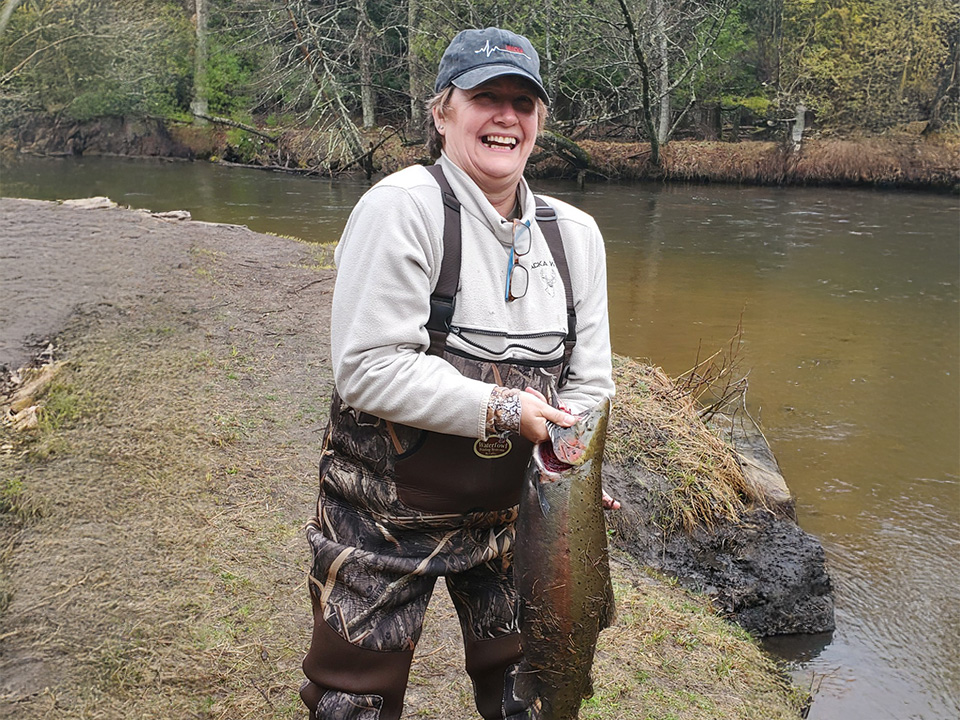
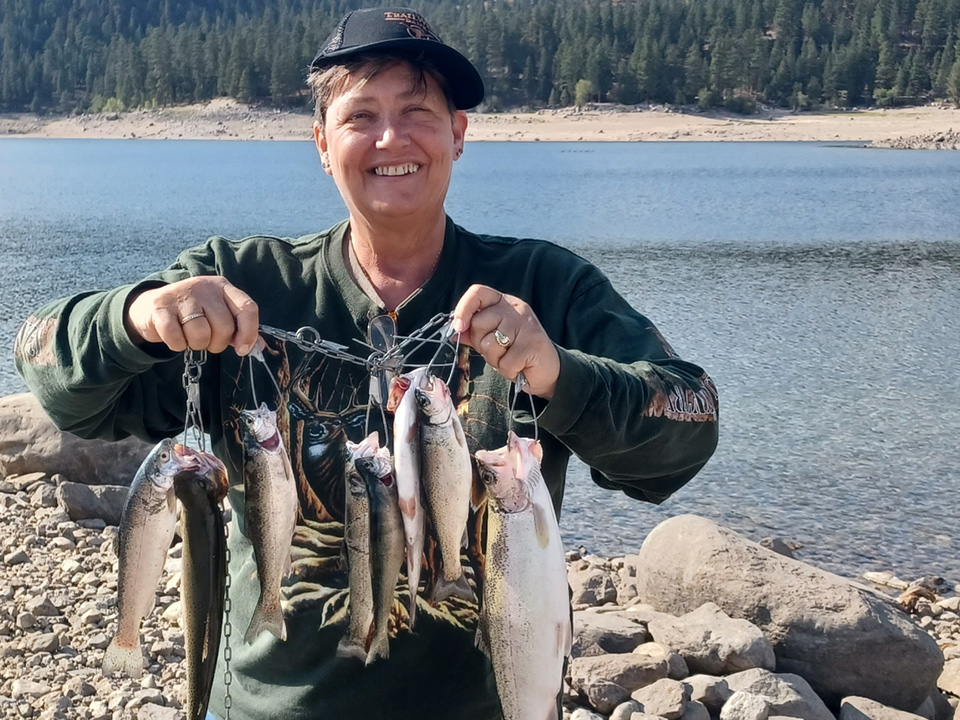
We have kayaks, fishing kayaks, that we bought and never got to use because of cancer. Mine is still brand new, wrapped up. I’m excited to finally get out on the water, fish, explore the backwaters, and just enjoy being present.
We have a camper, quads, and plans for ice fishing. It feels good to look forward again.
You’ve always been very outdoorsy. Where did that love come from?
I’ve always loved being outside. It grounds me. Hunting, fishing, kayaking – it’s where I feel most like myself.
I went hunting recently and got a doe, and my husband and son got one too. Those moments – being out there, sharing experiences – those are the things that fill my cup.
You shared some surprising fun facts during the interview. Why do you like sharing those stories?
Because they remind people that we’re more than our job titles. I’ve surfed in Florida. I rode my first wave when a hurricane was coming. I’ve done team roping and won money. I’ve announced rodeos.
People don’t expect that when they meet me, and I love that. Life should be interesting. You should collect stories.
How do you think those experiences shaped how you connected with students?
Students relate to authenticity. When they see that you’ve lived a full, varied life, they open up more.
Sharing pieces of myself made me more approachable. It showed students that there’s more than one path to success and that it’s okay if their journey isn’t linear.
Family clearly plays a huge role in your life. How did you balance that with such a demanding career?
It wasn’t always easy. I had my son later in life, and balancing work with motherhood came with its own challenges.
But family has always been my anchor. My kids, my grandbabies, my husband, they’re the reason I worked as hard as I did and the reason I know when it’s time to step back.
What does legacy mean to you after 30 years at Ross?
Legacy isn’t about recognition or titles. It’s about people remembering how you made them feel.
If someone remembers that I listened, that I encouraged them, that I believed in them when they didn’t believe in themselves – that’s enough for me.
What advice would you give to new educators just starting at Ross?
Be patient. With your students. With yourself.
Don’t lose sight of why you’re here. The work is hard, but it’s meaningful. And don’t be afraid to ask for help. You’re not meant to do this alone.
If you could describe your Ross journey in one word, what would it be?
Transformational.
It transformed my students’ lives, but it also transformed me.
Ginger’s journey at Ross is not defined by a title or a role, it’s defined by people. By students who didn’t quit. By colleagues who leaned on her. By moments of laughter, resilience, and growth. Her 30 years reflect a career built on showing up, caring deeply, and never losing sight of why the work matters.
Her legacy will continue through the lives she touched, long after she steps into her next chapter.