


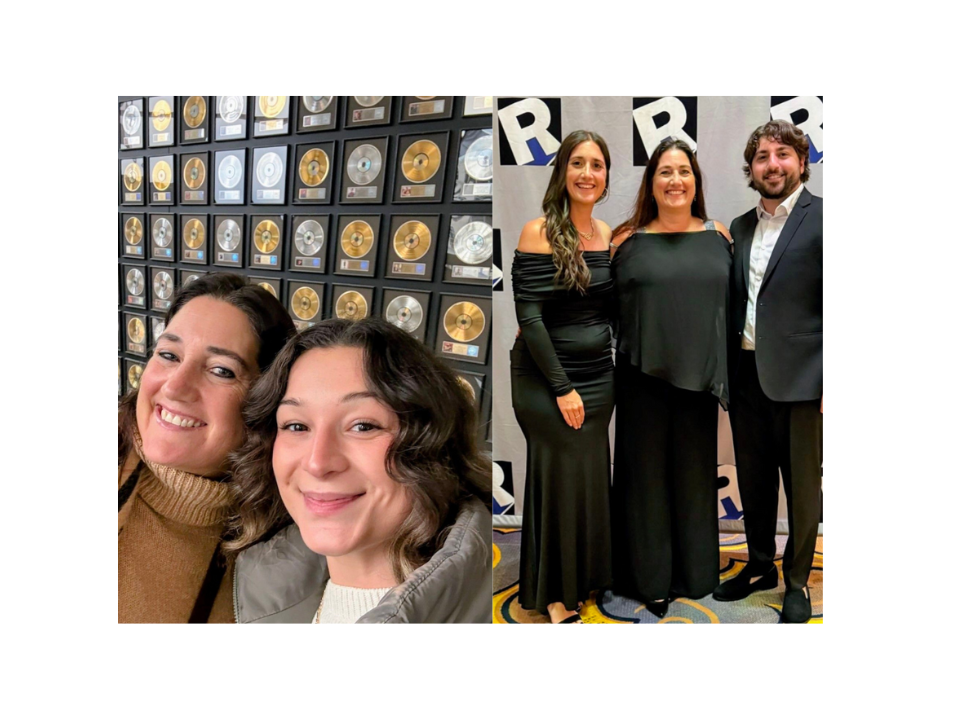
The journey of Jodie Karrip, the Kentwood Director, is a compelling story of resilience, determination, and the deep understanding that comes from overcoming significant personal hurdles. Her life story is a powerful reminder of how past challenges can become the fuel for future purpose. As a leader at Ross Education, her approach comes from a deep empathy for her students, shaped by her own experiences and successes.
Jodie brings a determined spirit, shaped by a unique blend of cultural background and a lifetime of caring for others. She not only guides the next generation of healthcare professionals but also inspires them by modeling how to break down barriers and find profound meaning in perseverance. In this conversation, she shares the details of her path, from a complex childhood and early career decisions to her guiding philosophies on leadership and well-being.
Here is what she had to say:
Tell me a little bit about yourself.
I grew up right here in the Grand Rapids area in what was considered at the time to be a mixed-race home, which certainly added layers of complexity to my early life. My dad is Middle Eastern, specifically Lebanese, and my mom is Dutch. This meant navigating life with two very distinctly different cultures. Most of my formative years were centered on my dad’s Lebanese side. That is precisely where my morals, my ethics, and all those foundational aspects of my life come from. I speak some Arabic, though I’m not as fluent as I once was, because you use it or you lose it, but I’m certain if I were suddenly immersed in it again, it would come back quickly. I spent a lot of time with my grandparents, my sitti and jidde (grandma and grandpa in Arabic), and my two youngest uncles were more like big brothers to me since my dad was the oldest. It was a strange, but incredibly family-centric dynamic. My children are my greatest accomplishment, and their success as great adults is what I am most proud of in this world.
You mentioned a complex childhood. How did your unique cultural upbringing and family dynamics shape your inherent drive and independence?
It was incredibly complex, and I was definitely that kid who pushed back. I was very naturally driven and competitive. The most impactful relationship was with my father, who, despite the expectations of a traditional Arabic culture, actually fostered my independence. I remember seeing him work on cars and saying, “I can do that.” He wouldn’t discourage me; he’d say, “Go ahead, try that.” He never stopped me from doing things typically reserved for male roles, whether it was playing football and baseball (I refused softball!) or working on something mechanical. He taught me the pros and cons and always let me make my own decisions, which led to a fierce sense of independence.
Your father instilled fierce independence in you. Did this quality ever present challenges in a collaborative academic or hospital setting, and if so, how did you adapt?
That independence absolutely presented challenges in a collaborative environment, particularly in the hospital setting. I’m naturally inclined to structure and take charge. Early in my career, my independence sometimes translated into simply doing things myself rather than delegating or waiting for consensus. However, in the high-stakes environment of the ED and surgery, I quickly learned the necessity of teamwork and relying on others. I adapted by understanding that being fiercely independent means not needing someone, but being strong enough to trust someone. I had to learn how to communicate the pros and cons to my team, just as my dad taught me, and then trust them with the “try that” part. This balance is something I instill in my instructors today.
What inspired you to pursue a career in healthcare, and how has that experience shaped your commitment to quality education today?
My grandmother was diagnosed with breast cancer and had to undergo surgery to remove one of her breasts. After the procedure, I saw her chest and was struck by how poorly the care had been executed – it was a moment that stayed with me, not just physically but emotionally. She looked butchered. Witnessing the lack of compassion and precision inspired a determination in me to make a difference in healthcare. That experience drives my commitment to quality education today. I hold our instructors and students to the highest standards because I know the difference between adequate care and truly compassionate, professional care. I strive to ensure our graduates are not only clinically competent but also empathetic and attentive, so patients never feel that a procedure was handled carelessly.
How did you choose the path of X-ray and Medical Assisting?
I always wanted to become an ER physician after seeing what happened to my grandmother, but life had its own plan. Life evolved, and I ended up having children; however, my drive to work in healthcare never faded. I chose the path of X-ray Tech and Medical Assistant because those roles allowed me to be hands-on and involved in patient care immediately. I was able to enter the field sooner and provide for my family while still pursuing my passion. I ended up working in the ED, surgeries, and practically every area of the hospital you can work in, doing many things that current MAs, unless they further their education, don’t have the opportunity to do. That diverse clinical experience proved invaluable later in education.
You’ve worked in virtually every area of a hospital. What was your most valuable lesson learned while working in clinical healthcare?
The most valuable lessons I learned came not just from the procedures, but from the raw human experience. As an X-ray Tech and Medical Assistant, I worked in every area of the hospital – the ED, surgeries, and more. Back then, they trained you to do everything, so I gained hands-on experience in areas that MAs today might not touch. This immersion taught me the lesson from my father that if your work doesn’t bring you joy, is the money you’re making worth it? When you work in high-stress environments like the ED, if you don’t absolutely love what you do, the burnout is swift and physically manifesting. That intense realization, combined with seeing people at their most vulnerable, reinforced my passion for training students in a way that provides them with fulfillment, not just a paycheck. It showed me that success requires more than just clinical skill; it requires heart, empathy, and personal sustainability.
How did you navigate the transition from a clinical role with a surgeon to an academic one at Ross?
I’ve actually been here twice. The first time was in 2002. I was a single parent and needed the extra income. I wanted my kids to have new sports equipment so they could participate in sports. I started teaching part-time at night. I left when my day career changed, but then I came back in a full-circle moment in 2010. I was still working for a surgeon part-time when I brought my daughter in for an admissions appointment. I was asking all the great questions because I knew the inner workings from the small campus behind Buffalo Wild Wings on 28th Street. The Kentwood Director at the time came out and said, “Do you have a minute to do a quick interview? We’re actually hiring.” When the full-time instructor position opened up, I had to negotiate with Ryan because he initially didn’t think I would take it due to the income difference. The transition was ultimately driven by the realization that my clinical experience could have a broader, longer-lasting impact through education, shaping hundreds of careers instead of just managing one practice. I’ve worked my way up from TA to primary instructor to full time instructor, and I’ve trained nearly every academic position since.
How would you describe your time at Ross, and what is the most rewarding, memorable part of your job?
My time at Ross has been ever-changing and always evolving, mirroring the complexity of the healthcare industry itself. It’s been fascinating to see the changes in times and the mindset of the students over the past decade-plus. But the most memorable part, and my absolute favorite part of the job, is the evolution of the student. It’s watching them come in -often guarded, aggressive, and defensive – and then transforming, becoming loving, kind, confident, and glowing. They arrive very much in their own shell, and then to witness them grow, like the cocoon to the butterfly, is incredibly rewarding and is fundamentally why I do what I do. This transformation is everything. I’m also proud to have four instructors who are currently working with us that were once my students; that’s a true testament to the legacy we’re building here at Kentwood.
When teaching future medical assistants, what part of the curriculum do you feel has the greatest long-term impact on their careers?
I would say the administrative side, especially law and ethics, has the greatest long-term impact. It’s not the most exciting part for students, and I know I’m not always their favorite instructor at first because I teach in a very real, structured, and direct way. But it’s absolutely vital. Law and ethics give them the foundation that protects them, defines their professionalism, and prepares them for the realities of healthcare compliance. Without that understanding, their clinical skills don’t matter, if they violate patient privacy or make a legal misstep, their careers could be at risk. Over time, students come back to me and say those “not fun” lessons were the ones that stuck with them the most, and that I had the biggest impact. That, to me, shows how critical this part of the training really is.
As a director and leader, what specific wisdom from your personal journey allows you to connect instantly with students struggling with hardship?
My connection with struggling students is immediate and genuine because I was them, and I don’t forget them. I haven’t forgotten my struggles. I remember what it was like to be on welfare and get food stamps. I use that experience to remind my students of why they are where they are. My personal survival is proof that change is absolutely possible. I share my story to keep them out of that deep, dark space that could have ended tragically. It allows me to remind them that I understand what it means to be working multiple jobs while trying to better yourself through education, and if I survived, they can conquer their current challenges too.
What are some of the most valuable lessons you’ve learned so far?
The most valuable lessons I learned came not just from the procedures, but from the raw human experience. As an X-ray Tech and Medical Assistant, I worked in every area of the hospital – the ED, surgeries, and more. Back then, they trained you to do everything, so I gained hands-on experience in areas that MAs today might not touch. This immersion taught me the lesson from my father that if your work doesn’t bring you joy, is the money you’re making worth it? When you work in high-stress environments like the ED, if you don’t absolutely love what you do, the burnout is swift and physically manifesting. That intense realization, combined with seeing people at their most vulnerable, reinforced my passion for training students in a way that provides them with fulfillment, not just a paycheck. It showed me that success requires more than just clinical skill; it requires heart, empathy, and personal sustainability.
What was the single hardest moment during that darker time, and how does that memory still serve you today?
The single hardest moment was realizing I was too proud to ask for help, even though my children needed me to. The shame of being on welfare and food stamps was intense, but the most difficult part was swallowing my pride and admitting my independence had momentarily failed. That memory today serves as a powerful reminder that pride cannot come before purpose. It reinforces the lesson that humility is necessary for growth, and it drives me to ensure our students feel no shame in seeking the resources and support they need from us to succeed.
Your passion for taking in teenagers is clearly tied to your own past. What is the one non-academic lesson you try to impart to the students you mentor and take into your home?
The one non-academic lesson I try to communicate is that you are worthy of a better life. So many of the kids I’ve worked with were just lacking that fundamental belief. I tell them, “You are already a good person. Your circumstances don’t define your worth.” I show them the stability and warmth that can exist in a family unit, something I learned from my grandparents, and remind them that they can replicate that stability and happiness in their own future. This belief system is often the missing piece that allows them to apply themselves academically and break cycles.
Given your personal philosophy on happiness and work, what steps do you take daily to ensure you find joy in your role as Kentwood Director?
I actively practice my philosophy every day to ensure my role brings me joy. My philosophy for the team and myself is simple and actionable: at the beginning of every day, I tell myself, “all you need is one win.” If you get one win – whether it’s helping a student with a difficult situation, passing a certification, or just having a positive interaction – then you’re golden. And at the end of every night, I sit down after the house is quiet and reflect on, “What was my win today?” This daily focus ensures I’ve impacted or made a change in at least one person’s life, which is my ultimate goal. This purposeful action is what prevents job dissatisfaction and keeps the positive energy flowing.
How do you stay motivated and keep your team inspired to uphold that “one win” philosophy?
My primary motivation comes directly from the students. I ensure the team is inspired by continually reinforcing the massive impact they have. They are often the person who pops into a student’s life and prevents them from falling deeper into a space they could regret. This collective purpose keeps us all driven. I remind the team that my own motivation is always to remind the students of their purpose. By sharing my personal story of survival, I maintain a bond of authenticity with the team and students, reinforcing the idea that there is no barrier that you can’t break through.
You came from a “mixed-race home” who faced explicit prejudice. How do you ensure the Kentwood campus is a place of belonging for all students, regardless of background?
My experience facing prejudice – even from a family member – in a mixed-race home makes diversity and inclusion non-negotiable for me. I ensure the Kentwood campus is a place of belonging by proactively fostering that warmth and sense of community. We teach respect and professionalism, but we also model acceptance. I make sure students understand that our differences are our strength, not our weakness. I work tirelessly to make sure every student knows they are safe, valued, and accepted here, creating a place where no one is judged for who they are or where they came from.
What’s your advice to students who feel intimidated or fear they are “too far behind” to begin a new career path in healthcare?
I tell them immediately: don’t let anybody or anything stand in the way of what you truly want. Fear is natural, but it’s a barrier you absolutely can break through. I remind them of my own journey, the times I was knocked down, and how I had to start over. The most important thing is to take that first step. I tell them that if their heart is in it, we are here to provide the structure, the support, and the knowledge. We don’t expect them to know everything now; we expect them to be dedicated to learning and growing. They need to believe in their own capability to succeed despite past setbacks.
You mentioned your two youngest uncles were more like big brothers. How did this unique family structure contribute to your ability to relate to your students and team today?
That unique family structure – where my uncles were close to my age – fostered an incredible ability to bridge generational gaps and relate to people from different life stages simultaneously. Having been both a child being cared for and, essentially, an older sister to young adults, gave me a nuanced perspective. Today, this allows me to approach students not just as a director or an instructor, but as a mentor who can understand their current challenges without judgment, much like a supportive sibling. It helps me create a more authentic, “real” connection with our campus community.
What is the most significant change you’ve seen in the mentality of the typical Ross student from 2002 until now?
The most significant change is the level of guardedness they carry when they first walk through the door. In 2002, there was a certain simplicity and perhaps less external pressure. Now, students arrive with much more baggage, often more guarded, more aggressive, and more defensive because they’ve had to fight harder just to get to us. The core desire for transformation hasn’t changed, but the walls they put up are higher. This is precisely why watching the cocoon turn into the butterfly is so much more rewarding today – we’re helping them break down much thicker walls.
What is the biggest challenge the modern Medical Assistant or X-ray Tech faces after graduation that you specifically prepare them for?
The biggest challenge they face is not the clinical skills – we teach that well – but the administrative and ethical pressure of modern compliance, particularly navigating law and ethics. The current generation of MAs is tasked with handling far more complex patient data and legal requirements than ever before. Since I taught the “not fun” law and ethics course, I know its importance. We intensely prepare them for the legal and ethical seriousness of the role, knowing that a single lapse in judgment or compliance can jeopardize their entire career.
What are the specific non-negotiable qualities you look for when hiring an instructor to ensure they uphold the Ross standard?
The absolute non-negotiable quality I look for when hiring an instructor is authenticity. They have to be “real”. It’s not enough to be clinically competent; they must possess the deep-seated empathy and the ability to connect with students who are struggling. They must understand that our job is half academic rigor and half life mentorship. I hire for heart and for the willingness to share their professional journey – both the successes and the stumbles – because that is what resonates with our students and upholds the warmth of the campus culture.
Looking at the future of healthcare, what soft skills do you believe are becoming increasingly critical for your graduates to succeed?
Beyond the technical skills, the soft skill that is becoming absolutely critical is de-escalation and communication. Given the increased pressure on healthcare systems and the emotional baggage students and patients carry, our graduates must be masters of navigating conflict and anxiety. They need to be able to approach a guarded, aggressive, or defensive person – the type of person I often was – and turn that interaction into a professional, positive experience. We emphasize this skill because patient interaction defines their success just as much as their clinical knowledge.
What’s one thing you wish more people knew about working in education or healthcare training?
I wish more people knew the depth of the human connection required and how incredibly rewarding it is. We’re not just teaching basic skills; we are dealing with students who are actively trying to break out of difficult life cycles and change their family legacy. I share my story because I want to give the students hope and show them what’s possible. I want them to know that I might be the person who pops into their life and prevents them from falling deeper into a space they could regret. It is this continuous fusion of academic rigor with human connection and mentorship that truly defines our work, and it’s the most fulfilling job in the world.
The life and work of Kentwood Director Jodie offer a powerful, professional view into the reality of transformative education. Her story is a testament to the belief that our past struggles, when met with resilience and determination, become the most powerful foundation for our purpose.
As a leader, Jodie embodies compassion and fierce independence, allowing her to connect with students on a profoundly real level. She doesn’t just train the next generation of healthcare workers; she inspires them to break cycles, seek joy in their work, and never let anyone stop them from achieving their goals. Her legacy is one of support, deep community connection, and the daily commitment to securing at least one small “win” for herself and her students.