



When Andrea graduated from Ross’ Medical Assistant program in 2007, she never imagined just how many doors the healthcare field would open. What began as an entry-level role in patient care evolved into a rewarding career spanning clinical operations, leadership, and healthcare management. Through hard work, a willingness to learn, and a passion for helping others, Andrea steadily advanced her career, proving that a medical assisting education can be the foundation for far more than many students initially realize.
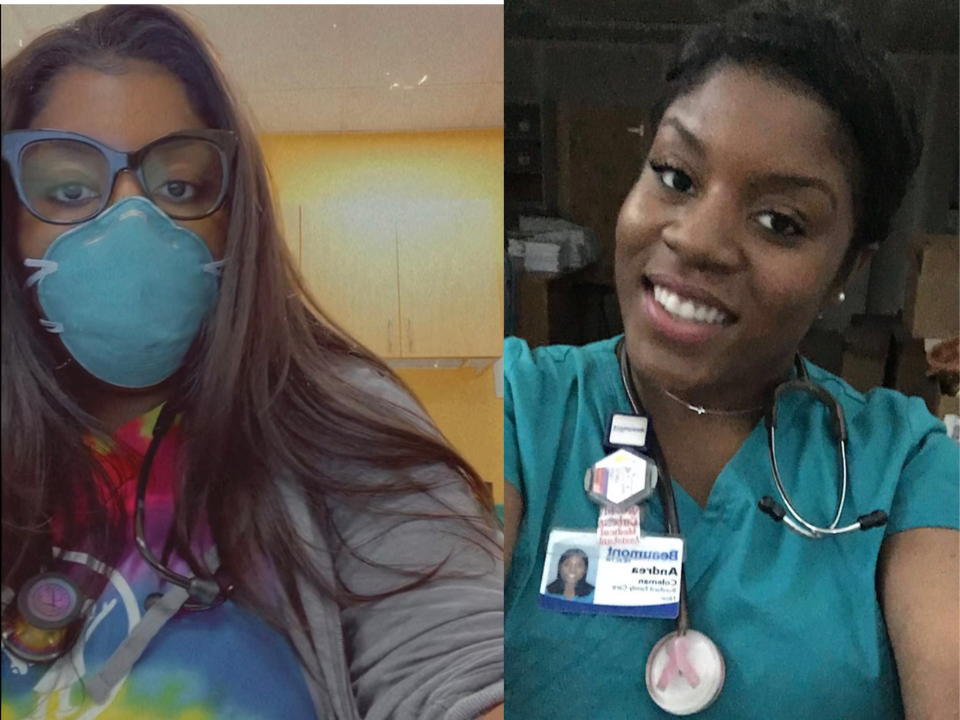
Today, Andrea’s journey reflects the many opportunities that can grow from a medical assisting education. Now based in Georgia, she serves as a healthcare operations leader, managing complex teams of medical assistants, scribes, providers, and front desk associates. She has broken through the limitations many assume exist within the profession, advancing into leadership positions and building a rewarding career dedicated to improving healthcare operations and supporting those around her. Along the way, she also launched her own venture, Her Purpose Co, to mentor and empower the next generation of healthcare professionals.
We sat down with Andrea to reflect on her journey from student to leader, discuss the importance of finding one’s voice in the clinic, and learn why she is now on a mission to show current students that their training is just the beginning of a life-changing career journey.
Let’s start at the very beginning of your journey. What originally brought you to Ross, and what was your experience like as a student?
I grew up in Oak Park, Michigan, as an only child. I always felt a pull toward healthcare – largely because I grew up watching my grandmother work at Children’s Hospital of Michigan. I absolutely loved being there, so I knew my “why,” I just didn’t know the “how.” Initially, I had my heart set on becoming a nurse. As I explored that path, I realized it might not be the best fit for me at the time, and I was disappointed and unsure of what my next step would be.
A counselor sat me down and asked if I had ever considered medical assisting. I honestly cried in that meeting! I didn’t even know what a medical assistant was; I just knew it wasn’t a nurse. But after I did some research and Googled the role, I realized it was a vital part of the healthcare ecosystem. When I visited the Ross campus, it was an immediate “yes.” It was a smaller, more intimate program compared to others I looked at. The instructors actually cared – I felt that personal connection immediately. We weren’t just a number; we were students they wanted to see cross the finish line.
Training involves stepping outside of your comfort zone. Were there any challenges you faced during your time at Ross that you still think about today?
Oh, definitely! The biggest challenge was the lab component, specifically drawing blood on each other. It sounds small, but it’s a massive exercise in trust. You have a needle in your hand, you’re nervous, and you’re practicing on a classmate who is just as inexperienced as you are. It’s hard to trust someone when you know they’re learning, and you’re terrified of hurting them.
But looking back, I am so grateful for that specific challenge. I can draw blood with my eyes closed now! Because of that foundational training, I was later able to lead teams and teach my own staff members who didn’t have that same confidence. It taught me how to remain calm under pressure – a skill that has followed me into every leadership role since.
You mentioned that you took a proactive approach to your externship. Could you tell us more about that?
Yes, that’s a huge tip for current students. I knew exactly where I wanted to work: Children’s Hospital. I did the research, found a pediatric office for my externship, and treated that placement like a real job from day one. I showed up on time, stayed professional, and soaked up every bit of knowledge about charting and documentation. I think it’s a misconception that the school will just “assign” you a dream job. You have to take the initiative to find the environment where you want to grow.
Your career trajectory is incredibly impressive, especially your move into healthcare operations. At what point did you realize there was a “career ladder” beyond the clinical room?
To be completely transparent, it took me a long time to see it. When I was starting out, I was hyper-focused on the clinical side. I wanted to be the best pediatric medical assistant possible. But when I eventually moved to Georgia and began working in “value-based care,” my perspective shifted.
I was working at a clinic that had a revolving door of administrators. I’m a natural leader who loves efficiency, so I started stepping up to manage things that weren’t technically in my job description. A nurse practitioner I worked with, Ms. Elaine, really challenged me. She asked, “Andrea, what do you actually want to do?” When I finally voiced that I wanted to be a center administrator, she just looked at me and said, “You’re already doing it.” That was the lightbulb moment. I realized that my clinical skills gave me credibility, but my operational mindset gave me the career path.
You mentioned the importance of “value-based care.” Can you explain how a medical assistant can use that framework to advance their own career?
That is exactly what I want to teach my students! In value-based care, your role is more than just taking vitals. I once had a provider who had poor bedside manner, which was hurting our NPS (Net Promoter Score) – a critical metric for Medicare reimbursement. Because I had built a strong working relationship with him, I was able to step in and coach him. We practiced mock patient visits where I played the patient, and we worked on his communication style until he improved. Our scores skyrocketed, and that success is what put me on the map for my first promotion to operations leader.
Managing people is a massive shift from the clinical side. How did you handle that adjustment?
It was a steep learning curve! You’re moving from managing a patient’s immediate care to managing the personalities and dynamics of an entire staff. I had to learn how to communicate differently, how to lead with empathy, and how to stay objective. But there is nothing more rewarding than seeing someone you mentor get promoted. I’ve helped four people on my teams advance their careers, and that is where I find my true purpose now.
You are now working remotely as a telehealth operations manager. How has this change in environment affected your work-life balance?
I love it! It’s much easier in many ways. As an only child, I’m pretty much a loner, so the virtual environment suits me perfectly. I don’t have to manage the physical energy of a center all day; I get to see faces on camera, get the work done, and move forward. It’s been a great evolution of my career, but I’m glad I had those years in the center first – it gave me the “street cred” to lead effectively from behind a screen.
What advice do you have for medical assistants who feel “stuck” in their current role?
If you don’t feel like you’re growing, or if you don’t feel like you’re a “light” in your workplace, it’s time to move. Don’t sit in a position that doesn’t serve you for 20 or 30 years. There is always another avenue. You don’t have to go back to school to be a nurse or a PA if that’s not what you truly want. There are so many administrative and operational roles in healthcare where your clinical knowledge is actually your biggest asset.
How do you handle the common question of “how much does a medical assistant make?”
Students ask me that all the time, and I love that they do! When I was a student, I asked my instructor that same question every month. It’s important to be realistic about compensation. Now that I am on the hiring side, I know exactly what the market looks like. I can tell students exactly what they should be aiming for and how to leverage their skills to negotiate for better pay.
You mentioned that you are currently in school to earn a degree, even with your success. What’s the reason for that?
It’s really just to have the degree on paper. My job now actually pays for me to go back to school, so I thought, “Why not?” It’s just another tool in the belt. I’ve already achieved a six-figure salary and a leadership position based purely on my certification and my experience, but I believe in continuous self-improvement. Never stop learning, no matter how far you’ve already climbed.
What do you find to be the most rewarding part of your current work in telehealth?
It’s still patient care. Even though I’m behind a screen now, I’m still serving our patients, many of whom live in underserved or impoverished areas. Some of them struggle with reading or writing, and being able to provide them with the services and guidance they need through our telehealth platform is incredibly fulfilling. You don’t have to be in the room to make an impact on a patient’s life.
Talk a little bit about your move to Georgia.
It was a complete leap of faith! At the time, I was working at a hospital in Michigan, but I had been visiting Atlanta to see a friend. I started applying for jobs, and when I received an offer, I decided to go for it. Moving to another state was not something I took lightly. It required a lot of faith, independence, and trust in my own abilities, especially stepping away from everything familiar.
My mother played a significant role in giving me the confidence to take that step. She always encouraged me to believe in myself and reminded me that I could achieve anything I set my mind to. During moments of uncertainty, I often reflected on the values she instilled in me and the reminder that growth rarely happens within our comfort zones.
I didn’t have a plan to work in healthcare operations or eventually become a healthcare leader. I just knew I wanted more and was willing to take a chance on myself. Looking back, that move opened doors I never could have imagined. It gave me the opportunity to embrace a new environment, challenge myself professionally, and continue building my career in healthcare with a stronger sense of purpose and self-belief. Sometimes, the opportunities that change your life are the ones waiting just beyond your comfort zone.
Are there any specific skills you think every medical assistant should focus on to be more “marketable” for advancement?
Documentation and charting are huge. If you can master those, you’re already ahead of the game. Also, learn to be a team player. Your externship site is an audition. Show up on time, be professional, and be curious. If you approach every day like you’ve already been hired, employers will notice.
Finally, what is your ultimate long-term goal with “Her Purpose Co”?
I want to create a community. I want to help medical assistants launch their own virtual assistant businesses, handling things like prior authorizations or schedule management for private practices that can’t afford a full in-house team. I want to show them that their skills are transferable. I want to be the mentor I wish I had when I was sitting in a classroom at Ross wondering what my future would look like.
You mentioned that you have a “30-minute purpose call” for students. What usually happens in those calls?
It’s all about strategy. They reach out and tell me, “I’m in my career and I feel stuck, what do I do?” We look at where they are, what their current comfort zone is, and I help them brainstorm the different paths available to them. It’s really about helping them see their own potential before they get discouraged.
You’ve talked about the importance of being a “natural leader.” How can someone who is naturally quiet learn to lead in a clinical setting?
Leadership isn’t about being the loudest person in the room; it’s about being the person who makes sure things run smoothly. If you’re quiet, lead by example. Show up prepared, be the person who masters the documentation, and be the one who steps in to help a teammate without being asked. That is the kind of leadership that gets noticed.
What do you think is the biggest misconception students have about the medical assisting profession?
That it’s a dead-end road. People think, “I’m just a medical assistant.” But there is no “just.” You are the backbone of the practice. You are the one who understands the patient’s needs, the provider’s workflow, and the clinical demands of the day. Once you realize you have all those pieces, you stop seeing it as a dead end and start seeing it as a foundation for anything you want to do.
You’ve worked in both fee-for-service and value-based care. Why do you encourage students to look into value-based care specifically?
It’s all about growth. In a value-based environment, the clinic is incentivized to keep patients healthy rather than just seeing as many patients as possible. Because of that, they invest more in their team members. You learn more about patient outcomes, population health, and documentation – which are all high-level skills that prepare you for management roles much faster.
How has being an “only child” influenced your career path?
It made me self-reliant. I didn’t have siblings to lean on, so I learned early on to advocate for myself and to figure things out. That independence served me well when I moved across the country for a job or when I decided to pivot into operations. I’m comfortable being on my own, which is why working remotely in telehealth is a perfect fit for me now.
Andrea’s story is a powerful reminder that our graduates are the heart of the healthcare industry. Whether you are currently practicing blood draws in the lab or studying for your certification exams, remember that you are building the foundation for a career that can take you anywhere. Her journey is just one example of how far a medical assisting education can go, and the many directions it can open up along the way. If you are a current student, remember: your potential is limitless. Keep pushing, keep learning, and as Andrea says, take that leap of faith.