


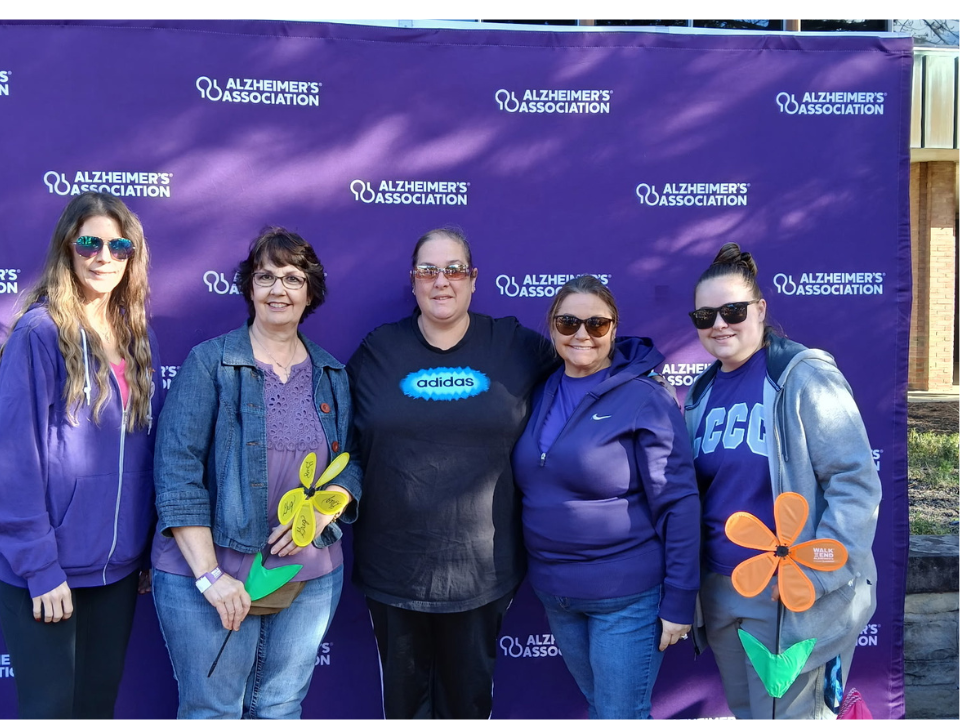
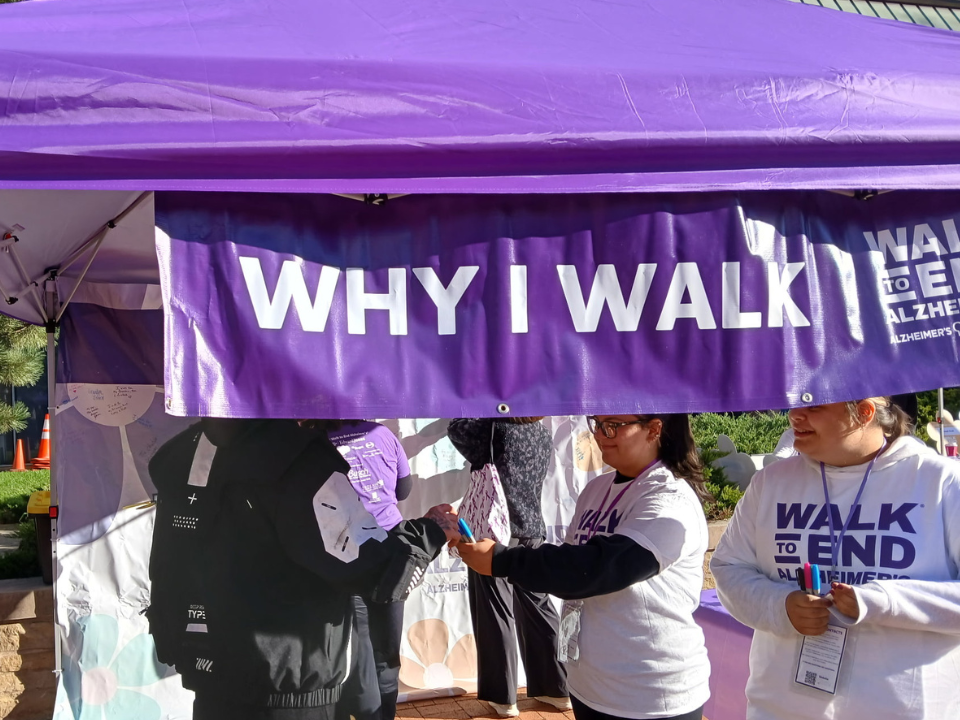
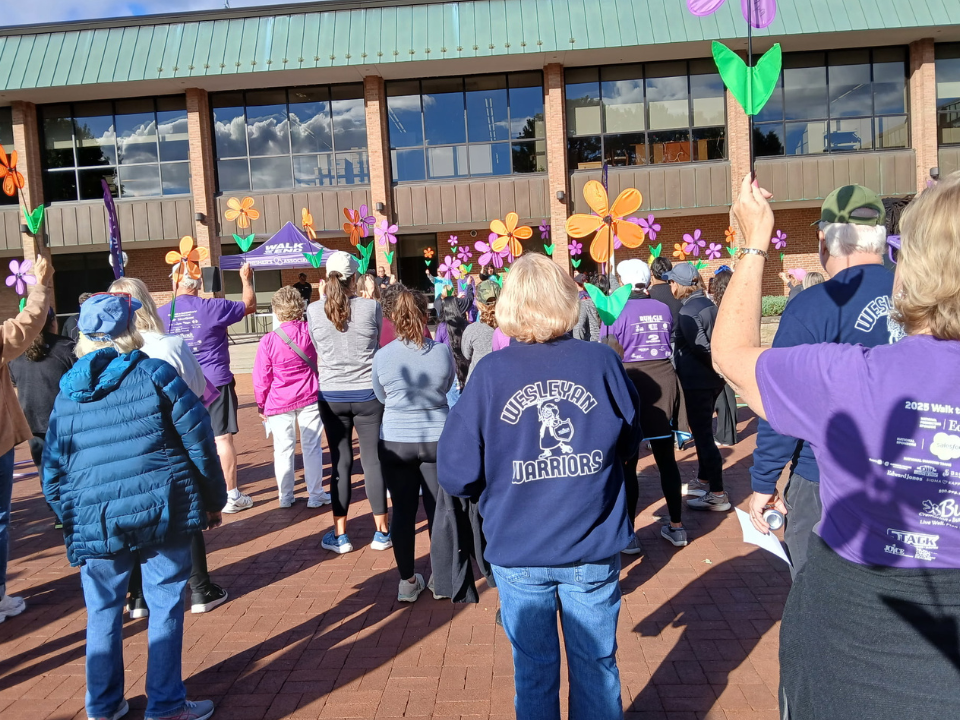
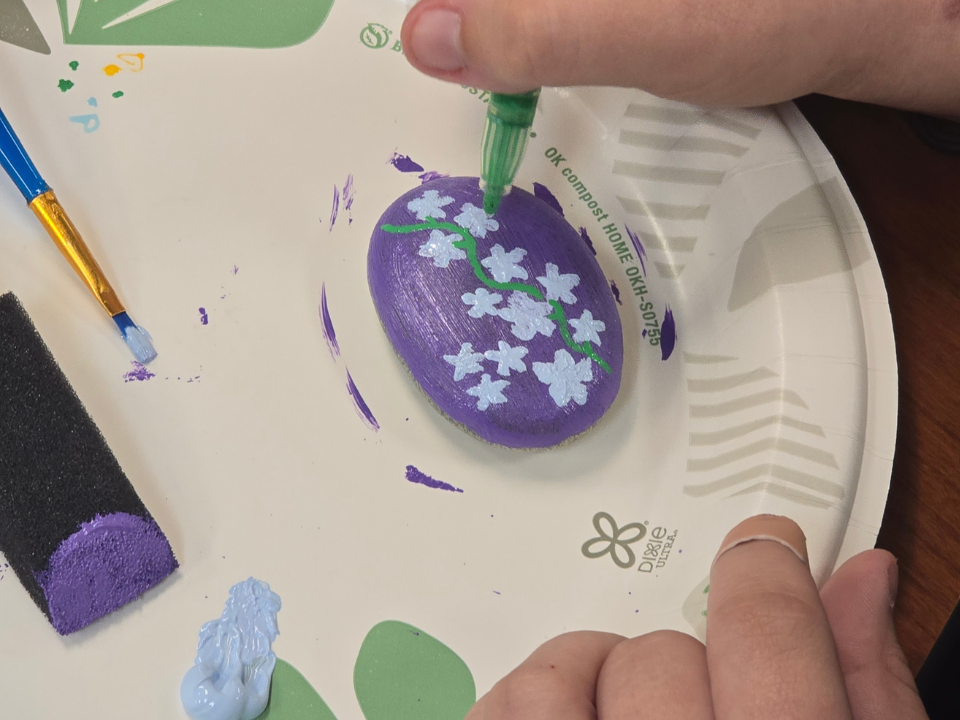
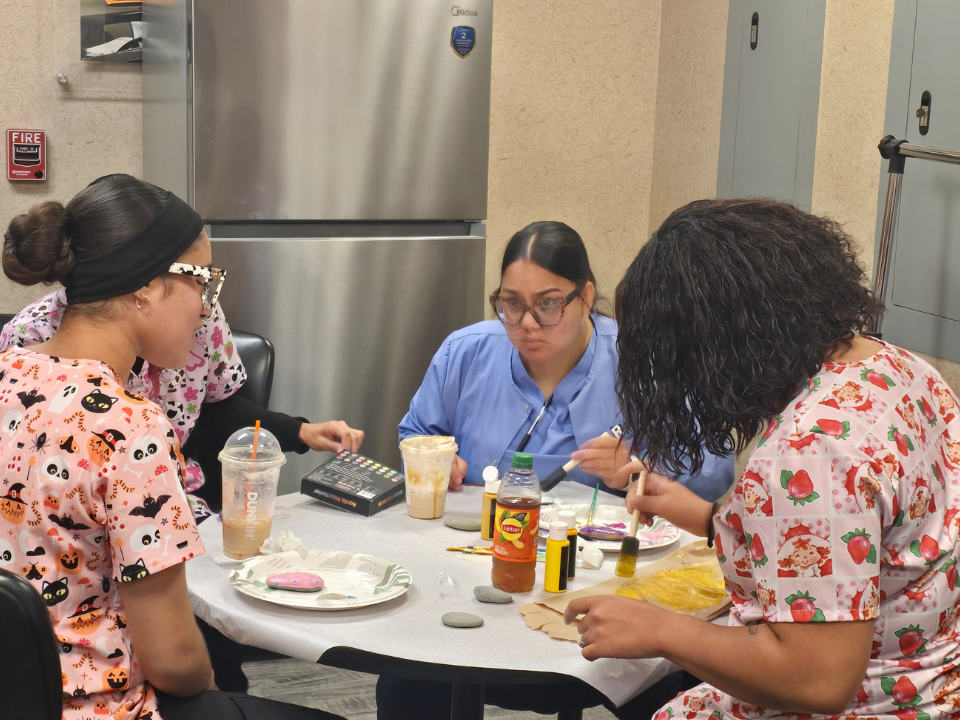
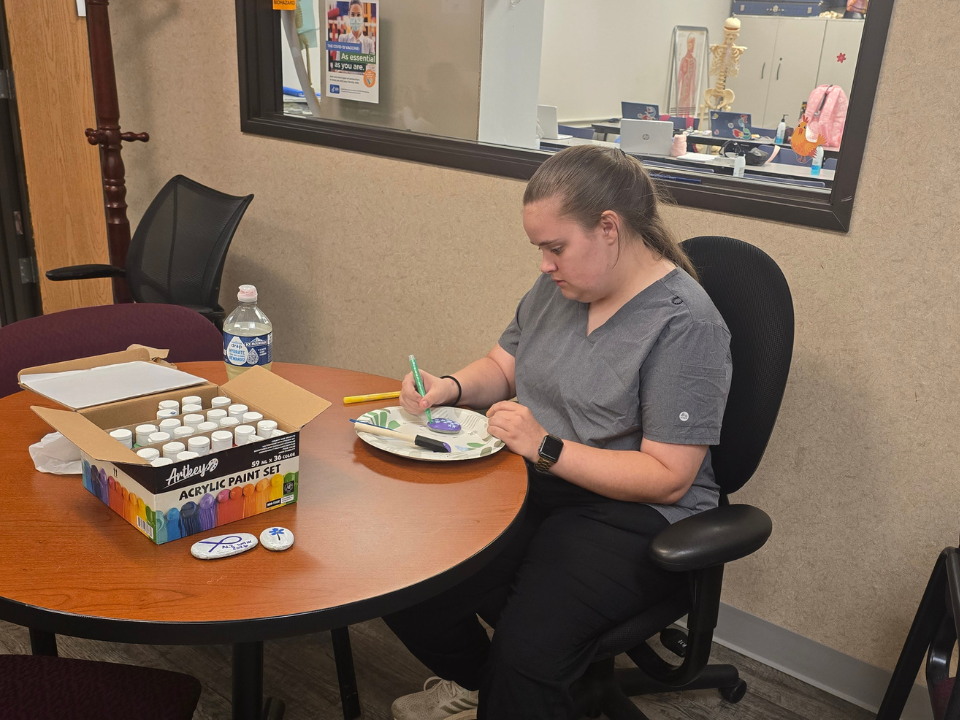
Community involvement provides opportunities to make a difference beyond the classroom. At Ross Medical Education Center’s Elyria campus, participating in the annual Alzheimer’s Walk has become a tradition that allows students and staff to support families affected by the disease. On October 3, 2026, the campus joined community members for the walk, continuing its involvement in the cause. In preparation for the event, students also painted colorful rocks decorated with uplifting messages to hide along the walking trail for participants and other visitors to discover.
For Russella Harker, Associate Director and BLS Instructor at Ross’ Elyria campus, the event holds special meaning. Her mother’s diagnosis with early-onset Alzheimer’s has given her a personal understanding of the challenges families face and strengthened her commitment to raising awareness and supporting research.
A Community Event With Personal Meaning
Alzheimer’s disease can affect memory, independence, daily routines, and relationships, creating challenges for both individuals and their families. For Russella, these challenges are part of her own family’s experience. Her mother was diagnosed with early-onset Alzheimer’s in her late 50s, and watching the disease progress has shaped her perspective on caregiving and the importance of continued research.
“I do it to raise awareness for that and raise money for the research for Alzheimer’s for a cure,” Russella explained about her motivation for participating in the walk. Her personal connection drives her to help others better understand the disease and support efforts to find better treatments and, ultimately, a cure. She also hopes the event encourages people to recognize the experiences of families affected by Alzheimer’s and approach them with patience and compassion.
Bringing Students Together Through Community Involvement
The annual Alzheimer’s Walk gives the Elyria campus an opportunity to connect with the surrounding community outside the classroom. Russella makes an effort to involve students because she believes community events help build camaraderie and allow students to interact in different ways. Working together for a shared cause can strengthen relationships among classmates and staff while helping students learn more about the people and families in their community.
The walk also provides an opportunity to better understand how Alzheimer’s affects individuals and their loved ones. Seeing families and community members come together in support of the cause can encourage students to approach others with greater empathy and understanding. Russella hopes to continue the tradition in the coming years and encourage even more students to participate, showing them that getting involved in the community can be a meaningful way to support others.
Painting Rocks to Spread Positivity Along the Trail
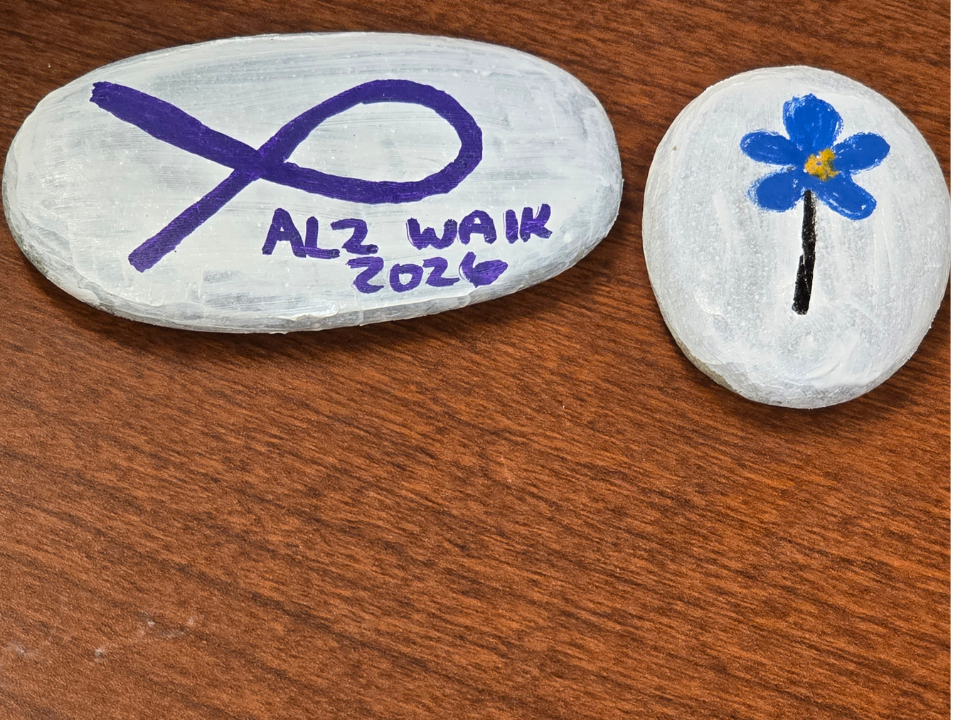
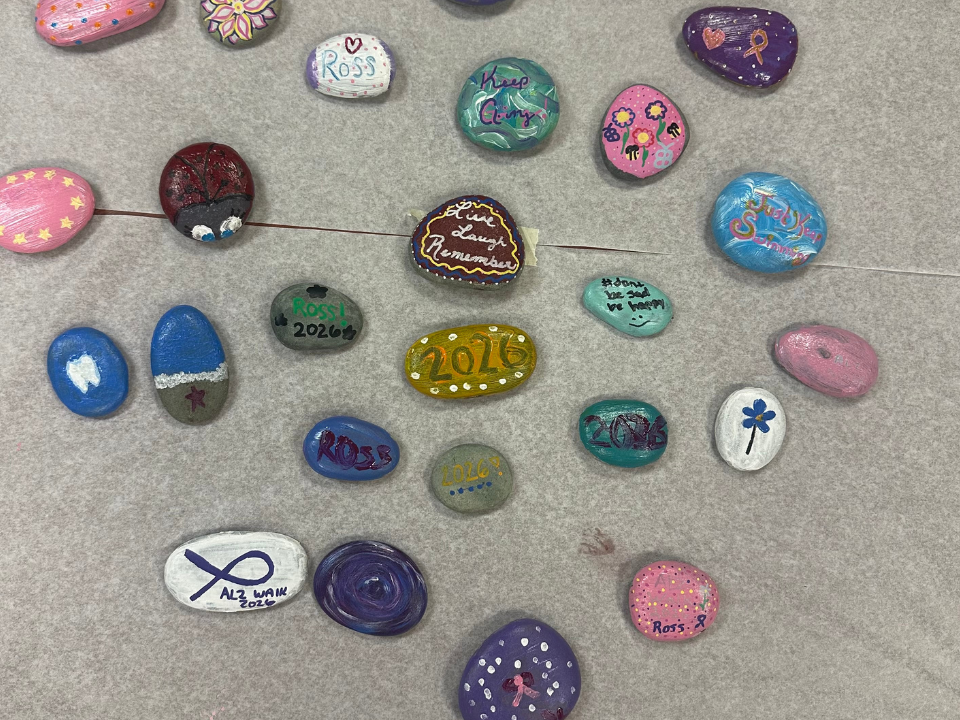
In preparation for the October 3 walk, Elyria students participated in a rock-painting activity designed to add an encouraging touch to the event. Students decorated rocks with inspirational messages and fun designs before hiding them along the walking trail at the local community college where the walk took place. Participants and other visitors could discover the rocks as they made their way along the trail.
Some of the rocks also featured the Ross hashtag on the back, connecting the activity to the campus and its community involvement while encouraging people to share their discoveries on social media. The project gave students a creative way to contribute to the event before the walk itself, with each rock offering a small reminder that thoughtful gestures can brighten someone’s day. For individuals and families affected by Alzheimer’s, these messages helped add a welcoming and encouraging element to an event centered on support and awareness.
A Daughter’s Perspective: Russella’s Experience With Alzheimer’s
As the oldest child in her family, Russella has taken on additional responsibilities as her mother’s condition has progressed. Her experience has shown her how deeply Alzheimer’s can affect an entire family, from adjusting to changes in a loved one’s independence to navigating the emotional challenges that come with a progressive disease.
What was it like when your mom was diagnosed with early-onset Alzheimer’s?
My mom was diagnosed when she was still in her late 50s, which was difficult for our family because she was so young. We were not expecting to face something like this at that stage of her life, and it has been especially challenging watching the disease progress and seeing the changes it has brought to our family. As the oldest child, I have also had additional responsibilities as my mom’s needs have changed. It has been something I’ve had to learn to navigate, and it has shown me how much a diagnosis like this can affect everyone in a family.
What has been the hardest part of watching your mom experience Alzheimer’s?
One of the hardest things is seeing someone who has always been independent begin to lose some of that independence. My mom was independent her whole life, and watching her experience changes in her memory and begin forgetting things and people has been very difficult. You remember the person they have always been and all the memories you share. Then you begin to notice changes that are hard to understand and even harder to accept.
It has also made me think about families who may not have children or other relatives available to help them. Having someone who can look out for a loved one can make a difference, and I worry about what happens to people who don’t have that support system in place.
How has your mom’s diagnosis changed the way you view Alzheimer’s?
Having a personal connection to Alzheimer’s makes you realize that it is much more than memory loss. You see how it affects someone’s independence, relationships, and the people who care about them every day. Before experiencing it within my own family, I knew Alzheimer’s was a serious disease, but living through it has given me a different perspective on the challenges families face. It has also reinforced why awareness and research matter so much to me. I want people to understand the realities of this disease and why we need to continue looking for better treatments and a cure.
What do you wish more people understood about individuals living with Alzheimer’s?
I wish people understood that these individuals are still the same people they have always loved, even when the disease changes their memory or behavior. As I shared during our conversation, “all of these people that are affected by Alzheimer’s are still the same people that you once loved and they’re still those same cherished people.” That is something I really want people to remember. Even if someone doesn’t recognize you or responds differently than they once did, that doesn’t erase the person they have been throughout their life. They still deserve love, patience, dignity, and understanding.
Sometimes people may become frustrated when a loved one repeats a question, forgets something important, or behaves in a way they don’t understand. It is important to remember that these changes are not happening intentionally to upset anyone.
Why is patience so important when caring for someone with Alzheimer’s?
People living with Alzheimer’s may struggle to understand why they are having difficulty remembering something or why a familiar situation feels confusing. For family members, those moments can be emotionally difficult, especially when they involve someone you have known and loved your entire life. Taking a step back can help you respond more thoughtfully rather than out of frustration.
I think it is important to remember who that person is beyond the disease. They have a lifetime of experiences, relationships, and memories, and they deserve to be treated with kindness throughout every stage of their journey.
What motivates you to continue participating in the Alzheimer’s Walk each year?
My mom’s experience is a major reason I continue to participate. I want to raise awareness and support research because I hope that one day there will be a cure for Alzheimer’s. I also want to help other families who are going through something similar. When a disease affects your own family, you understand how important it is to have support and to know that other people recognize what you are experiencing.
The walk gives me a way to support a cause that is personal to me while encouraging students to learn about issues affecting people in their own communities. I hope that by continuing to participate, we can help more families feel supported and contribute to a future with better treatment options.
What do you hope people take away from events like the Alzheimer’s Walk?
I hope people leave with a better understanding of Alzheimer’s and the families who are affected by it. I also hope they recognize that there are many ways to get involved, whether that means participating in a walk, supporting research, spreading awareness, or simply taking the time to understand what a family is going through.
For me, the most important message is to remember the person behind the diagnosis. Alzheimer’s may change someone’s life, but it does not take away their value as a person or the importance of the relationships they have built throughout their life.
Continuing the Conversation About Alzheimer’s Awareness
For Russella, the annual Alzheimer’s Walk is a way to turn a personal experience into an opportunity to support others. Through her continued participation, she hopes to raise awareness, encourage students to become involved in their communities, and help more people understand the experiences of families affected by the disease.
The Elyria campus’s involvement, from participating in the walk to painting encouraging rocks, shows how community support can take many forms. As Russella looks toward future walks, she hopes to see continued student participation and more opportunities to support meaningful causes. Ultimately, her message is simple: people living with Alzheimer’s and their families deserve understanding, compassion, and support, along with continued efforts to improve treatments and find a cure.